
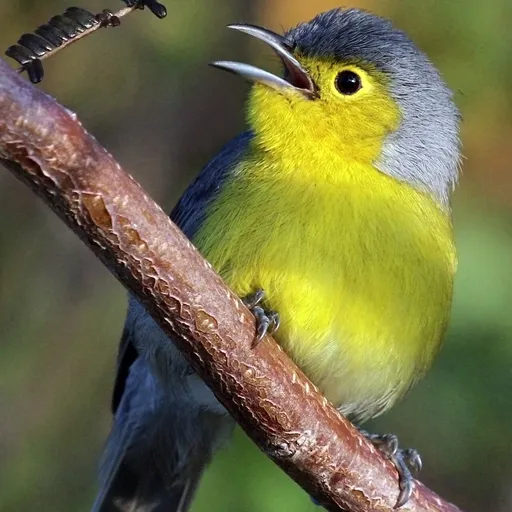
Oriente Warbler
Teretistris fornsi
Least Concern
Overview
The Oriente warbler (Teretistris fornsi) is one of two species in the Cuban warbler family Teretistridae. It is an endemic bird found exclusively in central and eastern Cuba and is currently assessed as Least Concern by the IUCN.
Identification
- Approximately 13 cm (5.1 in) long, weighing between 7.4 and 13 g.
- Nominate subspecies features a gray crown and upperparts, a yellow face, throat, and underparts, with white belly and flanks washed with dull brown.
- Subspecies T. f. turquinensis is slightly larger with sooty gray upperparts and gray flank washes.
- Song consists of a series of buzzy notes interspersed with sweeter notes, and calls include a sharp 'tchip'.
Habitat
Endemic to central and eastern Cuba, inhabiting all forest types with an undisturbed understory as well as scrubby thickets in drier areas. It ranges in elevation from sea level to almost 2,000 m (6,600 ft), occupying scrubby semi-arid woodlands near the coast and more humid forests at higher elevations.
Diet
Forages from the ground to the forest mid-level by gleaning, hover-gleaning, and probing bark and dead leaves. Its major prey is beetles, but it also consumes other insects, invertebrates, small lizards, and possibly small fruits. It often forages in flocks of up to about 15 individuals outside the breeding season.
Did you know?
The nest is constructed from moss, grass, rootlets, and plant fibers, usually placed in a clump of Tillandsia epiphyte about 1 m (3 ft) up on a branch or fork.
Sources
- Wikipedia · CC BY-SA 4.0
- Wikidata · CC0 1.0