
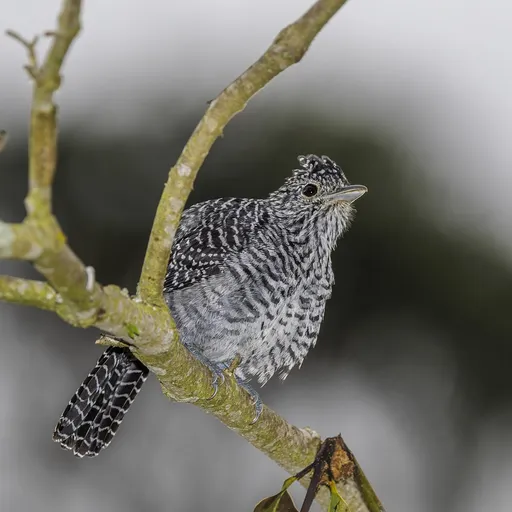
Bar-crested Antshrike
Thamnophilus multistriatus
Least Concern
Overview
The bar-crested antshrike (Thamnophilus multistriatus) is a species of typical antbird found in Colombia and Venezuela. It is assessed as Least Concern by the IUCN and is considered locally fairly common to overall common within its range.
Identification
- Length of 15 to 16.5 cm, with a stout bill featuring a hook reminiscent of true shrikes.
- Males of the nominate subspecies display alternating black and white bars across their plumage and crest, with streaked faces and throats.
- Females possess a cinnamon-rufous crest, crown, and upperparts, contrasting with barred underparts that have a reddish-brown tinge on the lower flanks.
- Song consists of 6 to 10 notes described as dū, dü dü dü du du-du-da'da, sounding similar but lazier than the Barred Antshrike's call.
Habitat
This species inhabits all levels of dry to humid deciduous and evergreen forests, as well as second-growth scrub. It favours forest edges with thickets and shrubby borders, and also occurs in open areas such as cultivated lands, gardens, and orchards. Its elevation range is typically between 900 and 2,200 m, though it can be found as low as 250 m on the Pacific side of Colombia.
Diet
The detailed diet is not fully known but is thought to consist mostly of insects and other arthropods. Its foraging behaviour is assumed to be similar to that of the Barred Antshrike (Thamnophilus doliatus), though specific habits are little documented.
Did you know?
Some researchers initially suspected the bar-crested antshrike was a subspecies of the chestnut-backed antshrike, but a 2007 study confirmed its status as a full species.
Sources
- Wikipedia · CC BY-SA 4.0
- Wikidata · CC0 1.0