
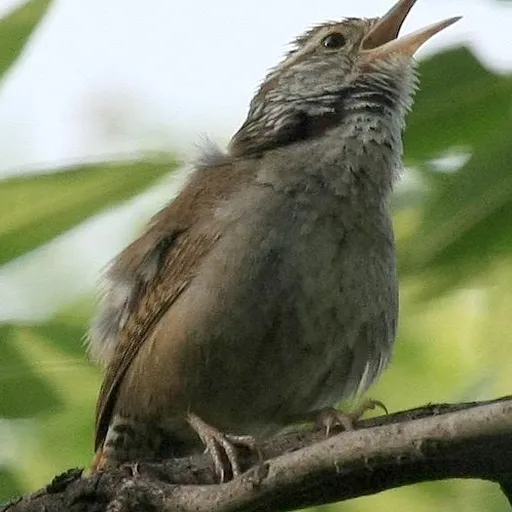
Sinaloa Wren
Thryophilus sinaloa
Least Concern
Overview
The Sinaloa wren (Thryophilus sinaloa) is a species of bird in the family Troglodytidae that is endemic to Mexico, with almost annual sightings in the United States. Classified as Least Concern by the IUCN, its population is estimated to exceed 500,000 individuals.
Identification
- Size: 11.8 to 14 cm long, weighing 10.9 to 19.8 g.
- Plumage: Dull brown upperparts becoming rufescent on the rump; rufous brown tail with black or dusky bars; white to buffy white supercilium with a black streak behind the eye.
- Markings: Dusky-striped white cheeks, broad black and white streaks on the sides of the neck, and a white throat darkening to pale brown on the flanks.
- Song: Described as loud and variable, composed of rich phrases, or clear gurgling whistles with a rapid series of short trills; calls include a rough buzzy rasp or a hard, dry chatter.
Habitat
The species inhabits the understory of deciduous forest and its edges, including undisturbed and second-growth areas, as well as plantations. Its range in Mexico varies by subspecies, extending from northeastern Sonora and western Chihuahua south to Michoacán, central Guerrero, and western Oaxaca, with the northernmost subspecies visiting southern Arizona.
Diet
The Sinaloa wren is insectivorous, foraging mostly near the ground but occasionally reaching as high as 10 m above it. It is assumed to capture its prey primarily by gleaning.
Did you know?
The nest is often placed near colonies of aggressive ants or wasps for protection. The nest's shape has been likened to a flask, draped over a slender branch with the body on one side and the tunnel entrance on the other.
Sources
- Wikipedia · CC BY-SA 4.0
- Wikidata · CC0 1.0