
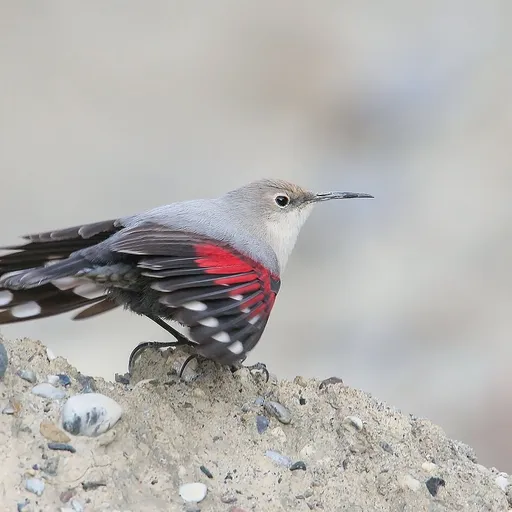
Wallcreeper
Tichodroma muraria
Least Concern
Overview
The wallcreeper (Tichodroma muraria) is a small passerine bird and the only extant member of the family Tichodromidae. It is a species of high mountains found throughout the Palearctic, ranging from southern Europe to central China.
Identification
- Length of 15.5–17 cm with a weight of 17–19 g, featuring primarily blue-grey plumage with darker flight and tail feathers.
- Most striking feature is the extraordinary crimson wings with white spots, which are largely hidden when folded but cover the coverts and basal half of the primaries and secondaries.
- Males have a black throat in summer grading into grey, while both sexes have a white throat in autumn and winter; the tail is short, black, and has a narrow white fringe.
- The song is a high-pitched, drawn-out whistle with notes that alternately rise and fall, sung by males while perched or climbing during the breeding season.
Habitat
A bird of high mountains, the wallcreeper breeds at elevations ranging from 1,000 to 3,000 metres in Europe and up to 5,100 metres in the Himalaya. It is largely resident but moves to lower elevations in winter, where it is found on buildings and in quarries. The species is endemic to Eurasian mountains, with a range extending from southern and eastern Europe to the Caucasus, western Iran, and eastern China.
Diet
The wallcreeper is an insectivore that feeds on terrestrial invertebrates, primarily insects and spiders, gleaned from rock faces. It sometimes chases flying insects in short sallies from a perch and moves across cliff faces in short flights and quick hops, often with wings partially spread.
Did you know?
Vagrant birds, particularly those found in wintering locations such as England and the Netherlands, can be extremely tame and confiding. Despite this approachable behaviour, they will hide when they become aware of being watched and may take roundabout routes to their nests to avoid prolonged observation.
Sources
- Wikipedia · CC BY-SA 4.0
- Wikidata · CC0 1.0