
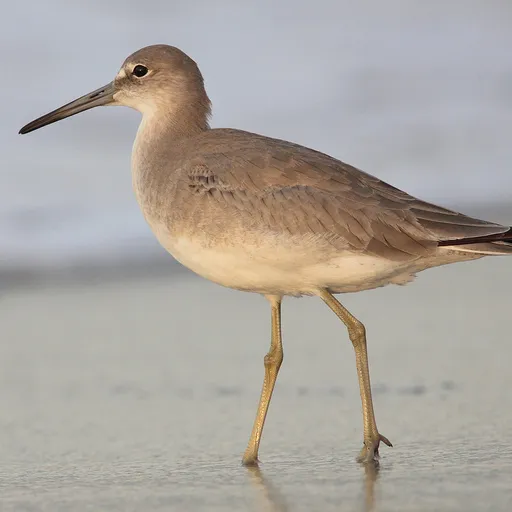
Willet
Tringa semipalmata
Least Concern
Overview
The willet, Tringa semipalmata, is a large, robust shorebird and the largest species in the genus Tringa. It is classified as Least Concern on the IUCN Red List, although the western subspecies faces threats from habitat loss and drainage of wetlands.
Identification
- Plumage: Gray above with a white rump and white underparts; breeding birds show brown barring on the upperparts, while non-breeding birds are plainer.
- Facial Markings: Features a distinct white area above the lores and a narrow whitish eye ring, giving the bird a spectacled appearance.
- Bill and Legs: Possesses a shortish, heavy but straight bill and gray legs.
- Song: Famous for its loud, piercing 'pill-will-willet' territorial call; the eastern subspecies sings at a higher pitch and faster rate than the western subspecies.
Habitat
Breeding habitats differ by subspecies, with eastern willets in coastal saltmarshes and western willets in freshwater prairie marshes, sloughs, and inland wetlands. In winter, both subspecies inhabit rocky and sandy coasts, mudflats, and coastal marshes. The range spans North America and the West Indies in summer, extending to South America and the southern United States in winter.
Diet
Willets are flexible feeders that walk steadily to peck prey or probe mud and silt with their sensitive bills, allowing them to hunt at night. They primarily consume invertebrates such as fiddler crabs, mole crabs, worms, and clams, but also wade into shallow water to catch fish and aquatic insects. They occasionally eat plant material.
Did you know?
The bird's name is onomatopoeic, derived directly from its loud piercing 'pill-will-willet' territorial song.
Sources
- Wikipedia · CC BY-SA 4.0
- Wikidata · CC0 1.0