
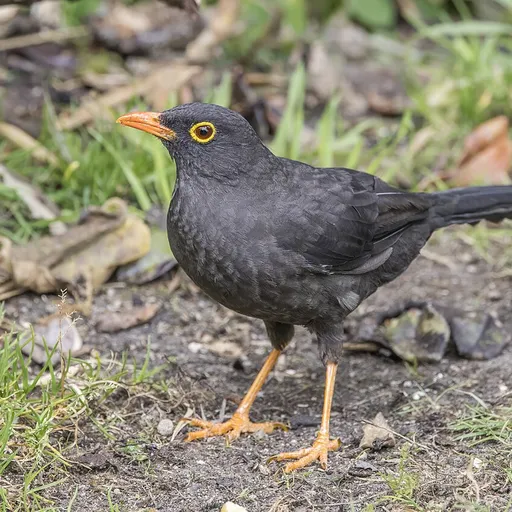
Great Thrush
Turdus fuscater
Least Concern
Listen
XC856754 · Juan Esteban · Sibundoy, Putumayo, Colombia · CC0 1.0
Overview
The great thrush (Turdus fuscater) is a member of the family Turdidae and is considered the largest thrush in South America. It is a common species found in the Andean highlands of western and northern South America.
Identification
- Length of 28–33 cm, making it the largest member of the Turdus genus.
- Plumage is black-brown, darker on the wings and tail, with a pale belly; juveniles are greenish-grey with buff spots.
- Distinctive yellowish-orange beak and legs, accompanied by a yellow ring around the eye.
- Song is soft and melodious, featuring quick, varied musical phrases ending in a very high note, heard only during the breeding season.
Habitat
Inhabits subtropical or tropical moist montane forests and high-altitude shrubland, often occurring at the edges of humid, secondary, or temperate forests. The species frequently uses open forests, backyards, parks, and farmland, commonly appearing in urban areas such as Quito and Bogotá. It typically occurs at altitudes between 1,800 and 4,000 meters, preferring zones above 2,000 meters.
Diet
A generalist feeder that principally forages for fruits and berries, which it tends to swallow whole. It also consumes invertebrates and may steal eggs and nestlings from other birds. Foraging generally takes place on the ground in short grass, though the bird also visits fruiting trees and shrubs, with activity peaking at dawn and dusk.
Did you know?
Outside of the breeding season, when adults become territorial, the species can form groups of up to 40 individuals, likely using communal perches in trees until the next breeding season begins.
Sources
- Wikipedia · CC BY-SA 4.0
- Wikidata · CC0 1.0