
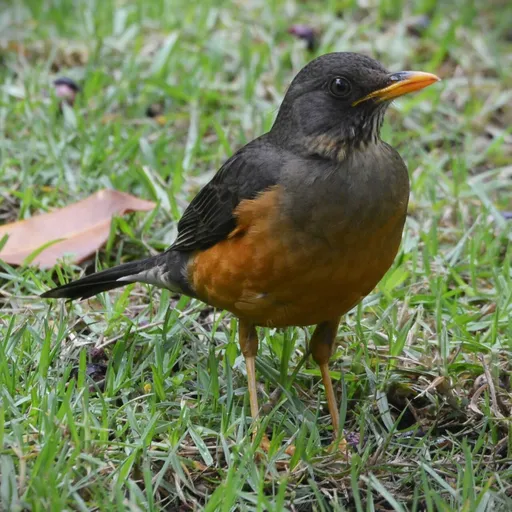
Olive Thrush
Turdus olivaceus
Least Concern
Overview
The olive thrush (Turdus olivaceus) is a common bird in African highlands, ranging from Eastern and Central Africa down to the Cape of Good Hope. It is one of the most widespread members of the thrush family in its range and is currently listed as Least Concern on the IUCN Red List.
Identification
- Reaches a length of 24 cm and a minimum weight of 101 g.
- Features dull olive brown upperparts and tail, a white belly, and underparts with an orange hue.
- The throat is speckled with white spots.
- The male sings a mix of fluted, whistled, and trilled phrases that vary geographically and occasionally mimics other birds.
Habitat
Primarily inhabits forest and woodland environments, though it has locally adapted to parks and large gardens in suburban areas. Its range covers African highlands, extending from the montane regions of Eastern and Central Africa to the Cape of Good Hope.
Diet
Feeds on earthworms, insects, snails, fruits, and spiders. It has been reported to engage in worm charming to bring worms to the surface for consumption.
Did you know?
The female builds a cup nest between 2 and 9 m above the ground in a tree or hedge, and she solely incubates the 1–3 eggs for 14–15 days before the chicks fledge in another 16 days.
Sources
- Wikipedia · CC BY-SA 4.0
- Wikidata · CC0 1.0