
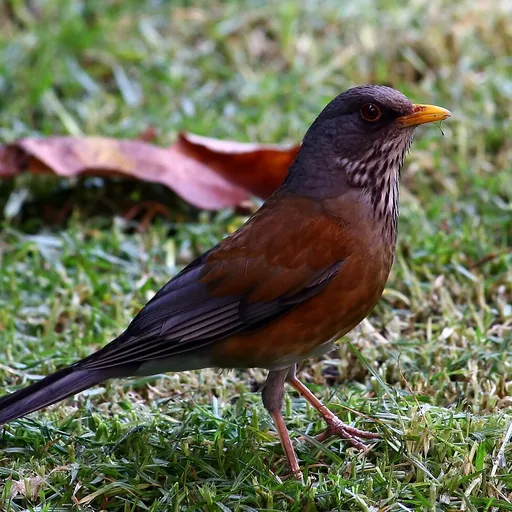
Rufous-backed Thrush
Turdus rufopalliatus
Least Concern
Overview
The rufous-backed thrush (Turdus rufopalliatus) is a species of bird in the family Turdidae, also known as the rufous-backed robin. It is endemic to Mexico but serves as a casual visitor to the southwestern United States. The species is currently assessed as being of Least Concern by the IUCN.
Identification
- Similar in size and shape to the American robin, measuring 21.5 to 25.5 cm in length with a wingspan of about 40 cm.
- Adults of the nominate subspecies have a pale gray head with black lores and a yellow eye-ring, a dull chestnut back with a gray wash, and orange-chestnut breast and flanks.
- Possesses a yellow bill and features a song described as a leisurely rich warbling that includes 2-3x repetition of some phrases.
- Subspecies T. r. graysoni is larger than the nominate with grayish buff scapulars and mostly dull buff breast and flanks.
Habitat
The species inhabits a variety of arid to semi-humid landscapes in the tropical and subtropical zones, including deciduous and semi-deciduous forest, gallery forest, thorn forest, plantations, and gardens. The nominate subspecies is found in western Mexico, while T. r. interior occurs in south-central Mexico and T. r. graysoni is present on the Tres Marías Islands. It may reach elevations of up to 2,500 m, although sources vary and some indicate a maximum of 1,500 m.
Diet
The rufous-backed thrush primarily feeds on fruit, particularly during the non-breeding season. It forages on the ground and in trees and bushes, often gathering in flocks during the winter.
Did you know?
The rufous-backed thrush is non-migratory, yet individuals of the nominate subspecies are regularly found as far north as the southwestern United States between October and April. Isolated populations in Mexico City and Oaxaca City are believed to be descended from escaped cage birds.
Sources
- Wikipedia · CC BY-SA 4.0
- Wikidata · CC0 1.0