
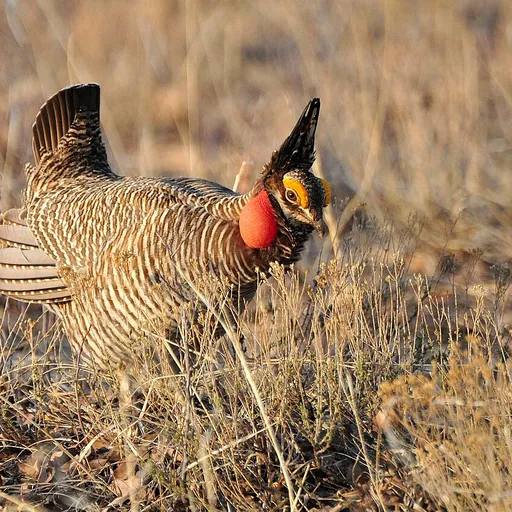
Lesser Prairie Chicken
Tympanuchus pallidicinctus
Vulnerable
Overview
The lesser prairie-chicken (Tympanuchus pallidicinctus) is a medium to large bird in the grouse tribe, currently classified as Vulnerable on the IUCN Red List. It is a smaller and paler relative of the Greater prairie-chicken, characterised by its restricted and patchy distribution across parts of the North American plains.
Identification
- Adults measure 15.0 to 16.1 inches (38 to 41 cm) in length and weigh between 22.1 and 28.7 ounces (630 to 810 g).\n- Plumage is striped white and brown, appearing paler than that of the Greater prairie-chicken.\n- Mature males possess yellow, comb-like feathers above each eye and long head feathers that can be raised to reveal pinkish-red gular sacs on either side of the neck.
Habitat
The species inhabits the sandhills and prairies of western Oklahoma, the Texas Panhandle including the Llano Estacado, eastern New Mexico, southeastern Colorado, and western Kansas. It prefers environments containing sand sagebrush, shinnery oak, and various grasses and shrubs, often selecting wide, open areas such as hills and ridges with short grass for mating displays.
Diet
The majority of the diet consists of foraged seeds, insects, crops, leaves, fruits, and forb buds consumed year-round based on availability. Adolescents under 10 weeks and adults during warmer months tend to eat mostly insects, while the diet shifts to seeds, leaves, and flowers in autumn and winter. Crops such as corn and grains are consumed when available, and the birds rarely drink directly as their diet provides sufficient hydration.
Did you know?
During the mating season, males establish territories in open areas and produce a specific "booming" call to attract mates. This territorial behaviour occurs in both spring and autumn, with the autumn cycle beginning in late August and peaking in October.
Sources
- Wikipedia · CC BY-SA 4.0
- Wikidata · CC0 1.0