
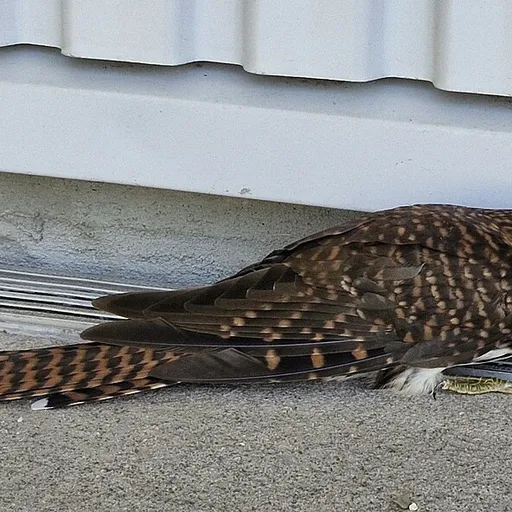
Pacific Long-tailed Cuckoo
Urodynamis taitensis
Least Concern
Overview
The Pacific long-tailed cuckoo (Urodynamis taitensis), also known as the long-tailed koel, is a migratory bird that breeds exclusively in New Zealand and winters across the Pacific. It is the sole member of the genus Urodynamis and is classified as a species of Least Concern on the IUCN Red List.
Identification
- Approximately 40–42 cm in length with a wingspan of 47–52 cm and a weight of about 120 g.
- Brown upperparts with white spotting on the wings and a long tail tipped in white; underparts are white with coarse black-brown streaking.
- A short, stout, and slightly hooked beak, with legs and feet that are grey to green.
- Produces a loud, intense, shrill whistle, leading to common names such as the 'screamer' or 'screecher'.
Habitat
Resident in New Zealand from early October to late spring, it prefers dense, closed-canopy native forests, particularly in the canopy, and is also found in pine plantations, scrub, and suburban gardens. For winter, it migrates to lowland forests, gardens, and coconut plantations across the Pacific, with a distribution stretching almost 11,000 km from Palau to Pitcairn Island.
Diet
Primarily insectivorous, this species also consumes bird eggs, nestlings, small adult birds, and lizards, occasionally eating fruit and seeds. It forages almost exclusively at the top of trees or in shrubs, predominantly at night, rather than on the ground.
Did you know?
Māori traditionally used the arrival and departure of this bird as a signal for when to plant and harvest kūmara (sweet potato).
Sources
- Wikipedia · CC BY-SA 4.0
- Wikidata · CC0 1.0