
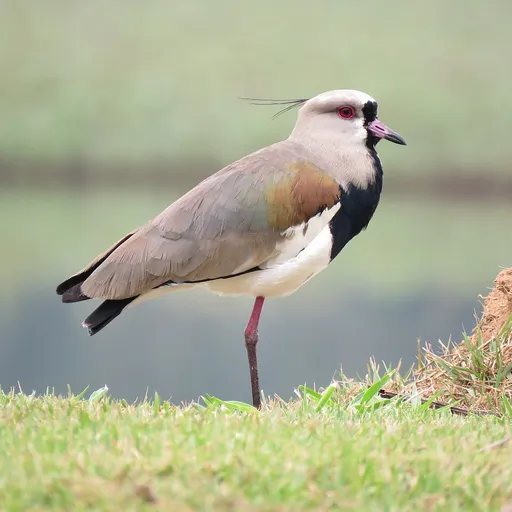
Southern Lapwing
Vanellus chilensis
Least Concern
Overview
The southern lapwing (Vanellus chilensis) is a common wader found throughout South America, known for its striking appearance and loud vocalisations. It is also expanding its range into Central America and the Caribbean, having established populations in Trinidad and Tobago.
Identification
- Size: 32–38 cm in length, weighing approximately 250–425 g.
- Plumage: Brownish grey upperparts with bronze glossing on the shoulders; black forehead, throat, and breast bordered by a white band separating the face from the grey head and crest; white underparts and rump with a black tail.
- Bill and Legs: Most of the bill and the legs are pink.
- Flight: Slow flapping flight reveals a broad white wing bar separating the grey-brown coverts from the black flight feathers.
- Call: A very loud and harsh keek-keek-keek.
Habitat
This species inhabits lake and river banks, open grasslands, and ploughed fields across South America, avoiding dense forests and high Andean regions. It has recently spread through Central America and reached the Caribbean islands of Trinidad and Tobago.
Diet
The southern lapwing feeds on insects such as grasshoppers, small invertebrates like earthworms, and small fish. It forages primarily at night using a run-and-wait technique, often in flocks, and may even feed in urban areas on parks or floodlit soccer pitches.
Did you know?
This bird possesses red bony extensions called spurs under its wings, which it uses to intimidate foes and fight birds of prey. Additionally, it breeds cooperatively in social groups consisting of a breeding pair and one or two young from the previous season.
Sources
- Wikipedia · CC BY-SA 4.0
- Wikidata · CC0 1.0