
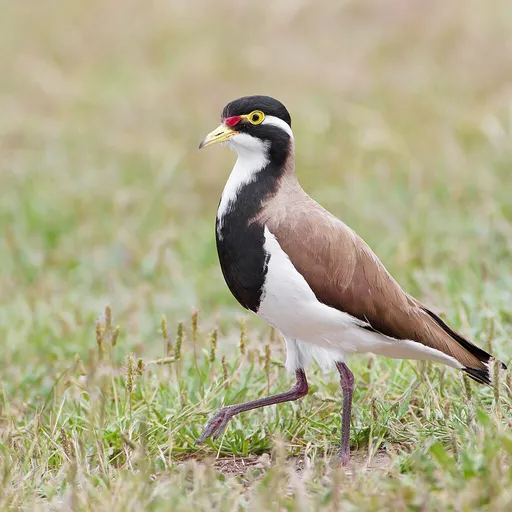
Banded Lapwing
Vanellus tricolor
Least Concern
Overview
The banded lapwing (Vanellus tricolor) is a small to medium-sized shorebird endemic to Australia. It is found on bare ground in open grasslands, agricultural land and open savannah, and was historically considered a game bird. The species currently holds a Least Concern status on the IUCN Red List.
Identification
- Plumage: Features a black cap, white throat and underparts, and a distinctive black breast band extending up the sides of the neck to the face; juvenile plumage is mottled dark brown and tan on the upper parts.
- Size and Structure: Ranges from 25 cm to 29 cm in length and weighs approximately 190 grams, with short dark purplish legs and a dull red tibia.
- Bill and Markings: Possesses a pale yellow bill with a black tip and a small red wattle at the base, alongside bright yellow irises and white eye stripes.
- Vocalisation: Emits a loud, strident 'kew-kew-kew' call when alarmed or a descending 'er-chill-char' sound during protests.
Habitat
Native to Australia and found throughout the mainland and Tasmania, this species is rarely present in northern regions and uncommon in most coastal areas. It prefers open plains and short grasslands, including heavily grazed paddocks and agricultural lands, while avoiding dense Acacia scrub. Unlike many shorebirds, it is not dependent on wetlands and may live far away from water.
Diet
Banded lapwings are obligate feeders that forage during both day and night. They prefer areas with very short grass to consume seeds and insects, including worms, ants, termites, beetles, cockroaches, grasshoppers, crickets and caterpillars.
Did you know?
The banded lapwing can nest in any month within dry inland areas provided there has been recent rain, though its typical breeding season spans from June to November. During nesting, chicks will freeze and remain completely still at the first sign of danger.
Sources
- Wikipedia · CC BY-SA 4.0
- Wikidata · CC0 1.0