
Silvereye
Zosterops lateralis
Least Concern
Overview
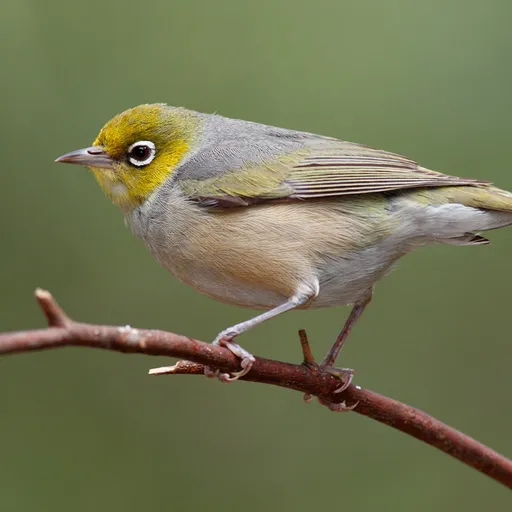
The silvereye (Zosterops lateralis), also known as the wax-eye or tauhou, is a very small omnivorous passerine bird native to the south-west Pacific. It is found across Australia, New Zealand, and various Pacific islands, where it is protected in New Zealand as a native species despite being an apparent self-introduction.
Identification
- 11 to 13 cm in length with a weight of around 10 g.
- A conspicuous ring of white feathers surrounds the eye.
- Plumage generally features olive-green wings, a grey or olive-green back, a yellow or grey throat, and flanks ranging from chestnut to pale buff.
- Undertail is either white or yellow.
Habitat
The species is native to Australia, New Zealand, and south-west Pacific islands including Lord Howe, New Caledonia, Loyalty Islands, Vanuatu, and Fiji. It is common to abundant in the relatively fertile south-west and south-east parts of Australia, as well as the well-watered coastal zone of tropical Queensland. The bird inhabits any vegetated area apart from open grasslands, including forests, scrub, horticultural blocks, and urban gardens.
Diet
Silvereyes feed on small insects, spiders, large amounts of fruit, and nectar, which occasionally makes them pests of commercial orchards. In New Zealand, they consume fruit from native trees such as kahikatea and rimu. When food is scarce in winter, they will take a wide variety of foods from bird tables, including sugar water, bread, cooked meats, and solid lumps of fat.
Did you know?
Their tiny size allows them to easily bypass bird nets in orchards, popping in and out through the netting to feed on fruit. Most of the Tasmanian population crosses the Bass Strait, an astonishing feat for 12 cm birds weighing only a few grams.
Sources
- Wikipedia · CC BY-SA 4.0
- Wikidata · CC0 1.0