
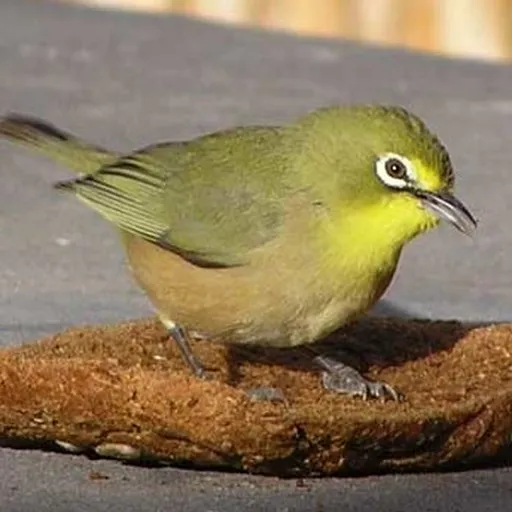
Orange River White-eye
Zosterops pallidus
Least Concern
Overview
The Orange River white-eye (Zosterops pallidus) is a species of bird in the family Zosteropidae, native to Namibia and South Africa. Although formerly considered part of the same species as the Cape white-eye, it is now recognised as genetically distinct despite occurring sympatrically in central South Africa.
Identification
- Measures 10–13 cm in length with pale olive green upper parts and tawny buff flanks and sides of the breast.
- Features a yellow throat and supraloral stripe, with black lore plumage and bare parts.
- Displays white eye-rings, which appear in juveniles during the second month of life.
Habitat
Native to Namibia and South Africa, it occurs at highest densities in the catchment areas of the Orange and Vaal Rivers. It also inhabits isolated locations in the Nama Karoo, Namaqualand, Namib, and mopane-veld, often associating with vegetation fringing periodically dry streambeds in dry regions.
Diet
Forages for insects from foliage and tree bark, but also consumes small fruit such as dry Searsia berries. Outside the breeding season, they forage in small parties and have been observed mixing with non-breeding Cape white-eyes.
Did you know?
While the usual song is subdued and muted, a sustained warbling song is heard during the breeding season. Breeding information remains very incomplete, but a clutch of three pale blue eggs has been recorded in a deep cup nest slung between horizontal twigs and strengthened with cobweb.
Sources
- Wikipedia · CC BY-SA 4.0
- Wikidata · CC0 1.0