
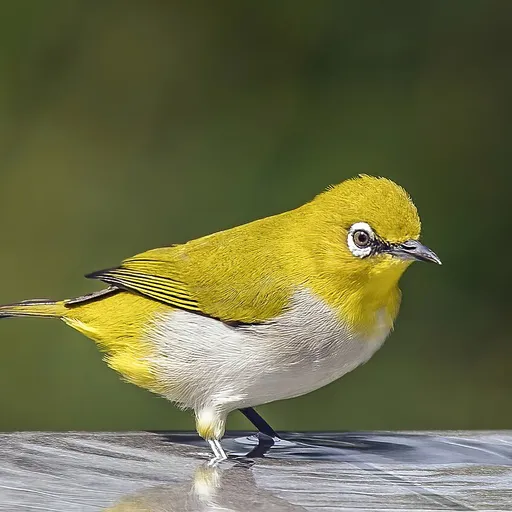
Indian White-eye
Zosterops palpebrosus
Least Concern
Overview
The Indian white-eye (Zosterops palpebrosus), formerly known as the Oriental white-eye, is a small passerine bird found on the Indian subcontinent. It is a resident breeder in open woodland and is classified as Least Concern on the IUCN Red List.
Identification
- Small bird, approximately 8–9 cm in length.
- Distinctive white eye-ring surrounded by yellowish olive upperparts.
- Yellow throat and vent, with a whitish-grey belly, though some subspecies exhibit yellow bellies.
- Soft, nasal cheer used as a frequent contact call during foraging.
Habitat
Found across a wide range of habitats from scrub to moist forest, including mangrove areas in parts of Pakistan. They are somewhat rare in the drier desert regions of western India. The species has a broad range extending from Oman and Arabia to Afghanistan, northern India, and into parts of China and Myanmar.
Diet
Though mainly insectivorous, the Indian white-eye also consumes nectar and various fruits. They forage in small groups and occasionally adopt a more insectivorous diet when on islands. They have been observed stealing nest material and even feeding chicks of other bird species, such as paradise flycatchers.
Did you know?
Their foreheads can become coloured by pollen from flowers they visit, which can lead to mistaken identifications in the field. They have also been observed bathing in dew accumulated on leaves.
Sources
- Wikipedia · CC BY-SA 4.0
- Wikidata · CC0 1.0